The desert is a photographer’s dream, but sand, glare and fast-moving vehicles make it tricky. These tips help.
Use golden light
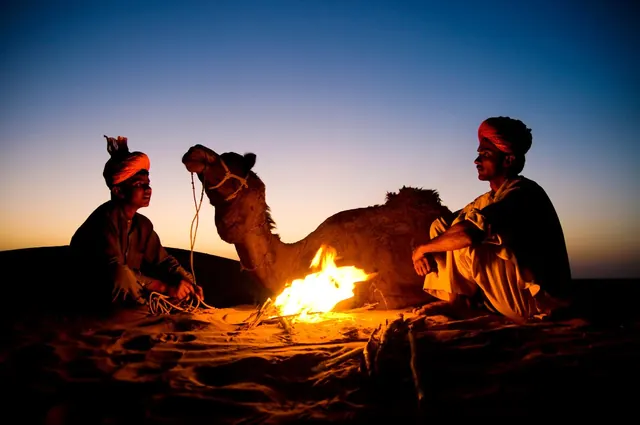
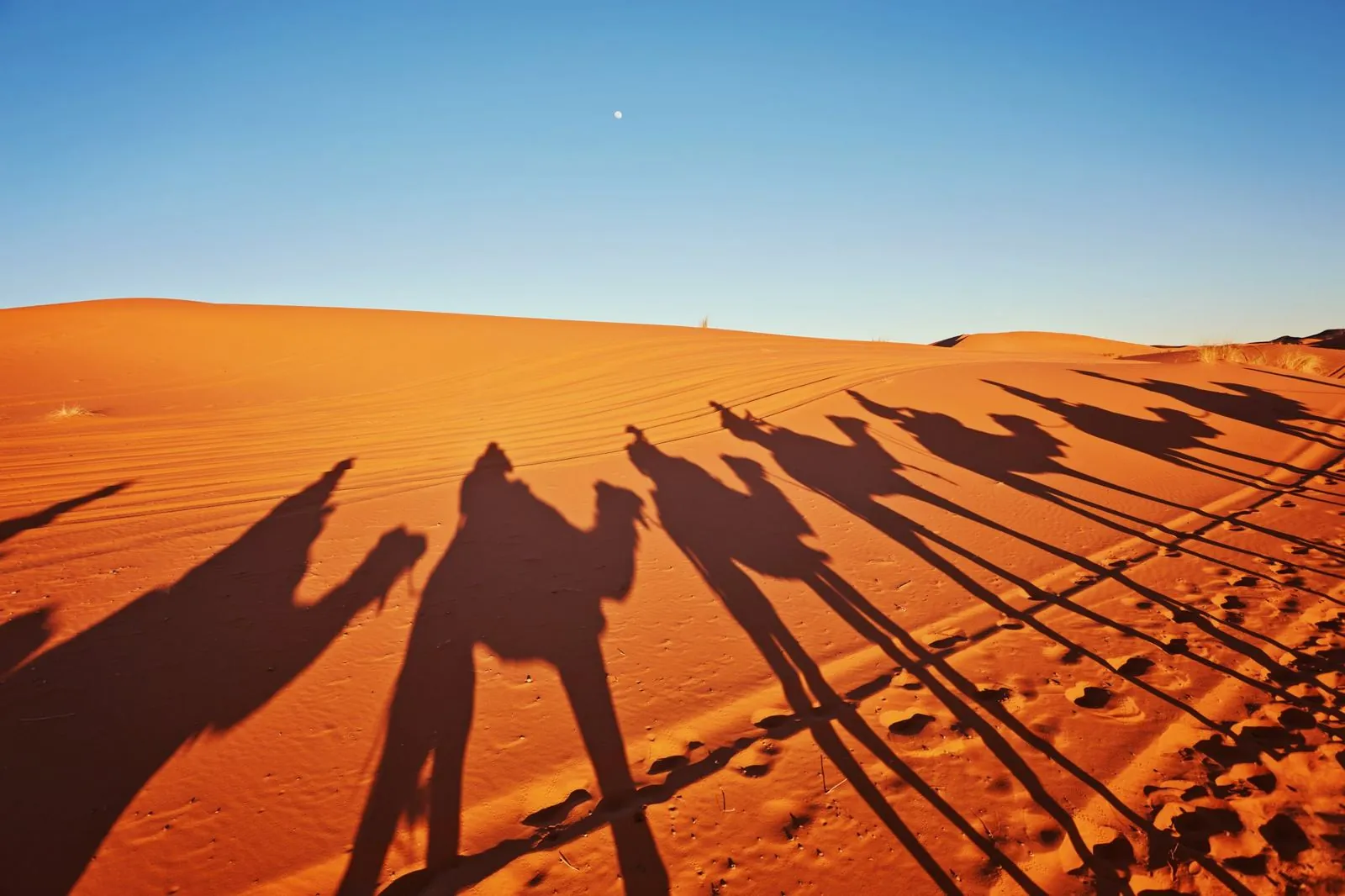
Shoot near sunset or sunrise. Midday sun flattens the dunes. See our sunset guide.
Phone settings
- Clean the lens before you shoot
- Tap to focus, then lower exposure slightly
- Use burst mode for action and jumping shots
Protect your gear
Keep cameras in bags during dune bashing. Use a sealed pouch for phones. Avoid changing lenses in the wind.
Best photo moments
- Dune ridgelines at the photo stop
- Camel silhouettes
- Costume portraits at camp
- Fire and Tanoura shows
Remember to enjoy the moment too. See what to wear for colourful photos, or message us.
Composition ideas
Use the curves of the dune ridges as leading lines, and place people small in the frame to show scale. Footprints in untouched sand add interest, while camels and 4×4 vehicles make strong foreground subjects.
Shooting action
For dune bashing, keep your phone secure and consider asking someone else to film from the next vehicle. For sandboarding, use burst mode and keep the horizon level.
Night and fire shows
Low light is tricky. Steady your phone, use night mode and avoid flash, which flattens the scene and distracts performers. Short videos often work better than stills at shows.
Protect your gear
Sand is the enemy of lenses and charging ports. Use a sealed pouch, a lens cloth and a power bank. Leave expensive cameras at the hotel if you are unsure. For the best light, pick the evening safari and message us; see all packages.